SUREINFO SAP Data Migration Toolkits
SUREINFO's self-developed SAP data migration toolkits facilitate data template preparation, data validation, and migration management throughout the data migration process. As enterprises grow, SAP systems may need to migrate between production versions. Our data migration services help organizations move SAP data smoothly across versions, starting with in-depth analysis of the current system and data to identify the right migration strategy - including detailed assessment of data quality, completeness, and accuracy to improve migration quality and predictability.
Data migration projects often repeat the same work engagement after engagement: rebuilding templates, hand-writing validation rules, and tracking load status in spreadsheets. The SUREINFO Data Migration Toolkit changes that pattern by providing a reusable, rule-driven migration asset built from our SAP delivery experience. Based on the analysis results, our experienced team of SAP consultants will create a data migration plan tailored to your organization's specific needs and requirements. We will work closely with you to drive the migration forward on the agreed schedule while minimizing business downtime and disruption.
Our data migration process includes the following workflows:
- Data extraction and transformation: our team will extract and transform your data from the source system using industry-standard data migration tools and techniques to improve consistency, accuracy, and completeness.
- Data mapping and validation: our consultants will map the data from the source system to the target system and validate the accuracy of the mapping to improve migration quality and predictability.
- Data load and validation: our team will load the data into the target system and validate its completeness and accuracy to improve migration quality and predictability.
- Testing and training: we will conduct extensive testing and provide comprehensive training to your team so they can use the new system effectively.
- Post-migration support: we provide post-migration support to help your new system operate correctly and address any issues that arise during the migration.
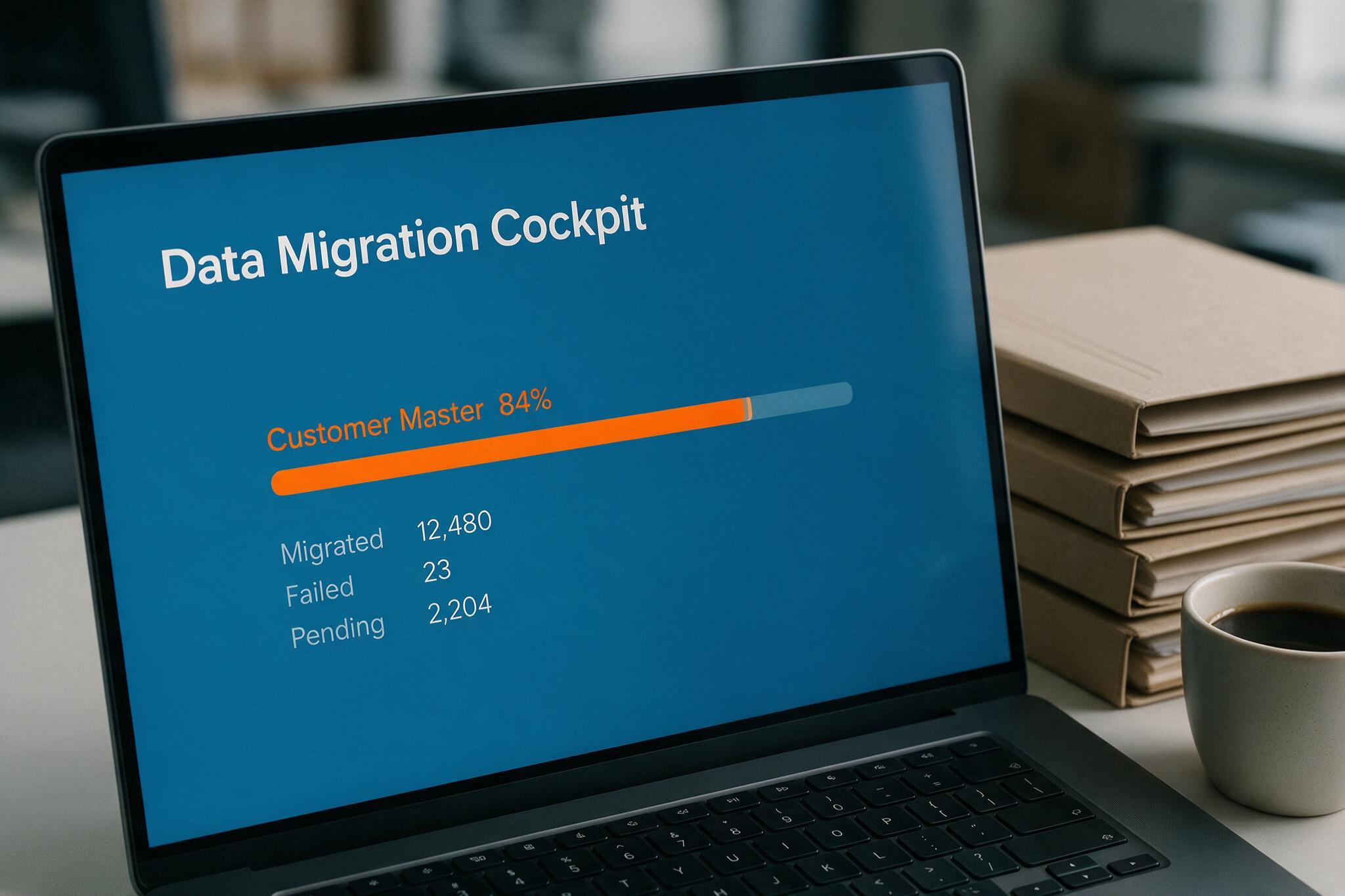
Three toolkit modules. The SUREINFO Data Migration Toolkit is organized into three integrated modules. The template-preparation module delivers preconfigured load templates and file formats for the most common SAP migration objects — G/L accounts, cost centers, vendors, customers, material masters, open items, and balances — so every project starts from a tested baseline rather than a blank spreadsheet. The validation engine runs automated checks for mandatory fields, value ranges, referential integrity, and duplicate detection against every load file, producing a focused exception list that business teams resolve before any data reaches the target system. The migration dashboard provides wave-level visibility into object counts, pass results, and open issues, giving the project manager and business owners a single source of truth for cutover readiness. Together these modules remove the "black box" feeling of migration: the business can see exactly what has been validated, what is outstanding, and whether the next wave can proceed.
Comparison with traditional migration. Without a toolkit, migration work is typically driven by manually built templates, ad-hoc validation macros, and Excel trackers that must be reconstructed for each object and each project. This approach is slow, error-prone, difficult to audit, and it repeats the same design effort across engagements; when a consultant leaves, the knowledge embedded in spreadsheets often leaves with them. The toolkit replaces that pattern with reusable templates, rule-based validation, and a managed dashboard — shortening preparation time, catching more defects at the data-owner stage, and producing an auditable record of every load pass (actual results vary by project). Teams spend less time fixing preventable errors and more time resolving genuine business exceptions.
How the toolkit is engaged. We typically introduce the toolkit during the migration assessment, where we scope the object list, select the matching templates, and agree the validation rules with each data owner. In realization, business teams fill the standardized templates, the engine validates them, and the dashboard tracks every wave's status. During cutover, the same templates and dashboard are reused for the final delta loads, so the production migration is a rehearsal of a process the team has already run several times. This continuity is what turns data migration from a stressful, undefinable activity into a managed, repeatable workstream with predictable quality.
Our SAP data migration services help organizations migrate SAP data from one production version to another while minimizing business downtime and disruption. By leveraging our expertise in data migration, we help organizations achieve a smooth and successful migration process, reduce business risk, and improve operational efficiency.